How Much Does It Cost to Make a Commercial?

We've made commercials for $50,000. We've made them for $100,000, $250,000, $500,000, and considerably more. We've also seen plenty of expensive commercials that weren't particularly good, and some remarkably effective work made for very little money.
So how much does a commercial cost?
It depends on what you're trying to make, what you're trying to accomplish, and how you approach the production. There isn't a standard price for "a commercial." There's a price for a particular idea, executed in a particular way, with a particular set of resources.
But here's something that gets lost in most conversations about production budgets: You don't need to know exactly what you want to make, or even how much you should spend, before calling us.
In fact, we'd prefer that you didn't.
Call us before you have the answer
One of the most common mistakes brands make is deciding what they want to produce, developing the creative, and then asking how much it will cost. By that point, they've often committed to a particular approach without understanding what it takes to make it.
We'd rather have that conversation much earlier. Before you've written the script. Before you've settled on a format. Ideally, before you've decided what the budget should be.
We can make great work at almost any budget level. We've made ambitious campaigns with millions of dollars and found clever ways to make much smaller budgets go surprisingly far. But those projects don't succeed because we somehow make expensive things cheap. They succeed because we develop ideas and production approaches that make sense together.
Sometimes that means finding a more efficient way to execute an ambitious concept. Sometimes it means changing the concept entirely. A $50,000 idea shouldn't necessarily be a compromised version of a $500,000 idea. It might be something completely different, and much better suited to the resources available.
That's where our experience becomes valuable. We know what things cost, but more importantly, we know what makes things good. We can help you understand where to spend, where to save, what to simplify, and which parts of an idea are worth protecting.
The catch is that you have to let us help make those decisions. If you come to us with a fixed concept, an immovable budget, and a production approach that's already been decided, there's only so much room left to be creative.
Runtime is a bad way to estimate cost
A thirty-second commercial doesn't necessarily cost half as much as a sixty-second commercial. A six-second spot can be more expensive than both. Runtime tells you how long the finished piece is. It tells you very little about what has to happen to make it.
Think about building a house.
A cottage and a mansion might both have a kitchen, a bathroom, and a roof, but you wouldn't expect to build them for the same price. More importantly, you can't build a mansion on a foundation designed for a cottage. As the house gets bigger, everything supporting it has to grow too. The foundation, framing, electrical, plumbing, and structural engineering all have to accommodate the ambition of the project.
Production works the same way.
A :30 featuring one person in one room might be relatively simple. Another :30 might involve six locations, celebrity talent, a custom-built set, a car rig, visual effects, fifty extras, licensed music, and three days of shooting.
They're both thirty seconds long. They are not the same production, and they don't require the same infrastructure.
Every commercial budget is made up of interconnected costs: creative development, directors, crew, equipment, casting, talent, locations, production design, wardrobe, travel, insurance, editing, visual effects, music, sound, and all the other things required to get the work finished.
And just like building a house, changing one thing can affect everything around it. Adding another floor doesn't just mean buying more lumber. You might need a stronger foundation, additional structural support, more electrical capacity, and a bigger crew to build it.
In production, adding another location might mean another day of shooting, additional crew, transportation, permits, and equipment. Adding more cast can mean more wardrobe, hair and makeup, holding space, and time.
The mistake is assuming you can keep adding ambition without expanding the infrastructure required to support it.
A good production budget isn't simply a list of expenses. It's a plan for building something that can actually support the creative idea.
And like any good building project, the earlier you understand what you're trying to construct, the smarter you can be about how to build it.
Budget should be a creative input
We'd much rather know what a client is comfortable spending at the beginning of a project than discover it after everyone has fallen in love with an idea.
That doesn't mean the budget should dictate the creative. It means it should inform it.
Trying to produce a $500,000 idea for $100,000 usually doesn't result in a good spot. It results in a compromised $500,000 idea.
If we know the constraints early, we can develop something ambitious that belongs inside them. Maybe you stay in one location. Maybe you use a smaller cast. Maybe the production becomes more graphic, more performance-driven, more documentary, or stranger in a way nobody would have considered with an unlimited budget.
A smaller budget doesn't have to mean a smaller idea. It means finding an idea whose ambition is expressed in ways you can actually afford.
This is something we've been doing for more than twenty years.
In 2012, we were approached about a Ford Fusion campaign. They had three scripts, needed 40 videos, and had $2.5 million for the whole thing. Traditional automotive production companies had quoted roughly that entire budget for the original three scripts.
Which, to be fair, is how that math usually works.
So they went looking for someone with a different relationship to math.
We worked backwards. Rather than treating the scripts as fixed and trying to squeeze the production into the budget, we designed a production system that could deliver the whole campaign, then adapted the creative around it. Three directors, overlapping productions across multiple cities, and comedians including Paul F. Tompkins, Reggie Watts, Abbi Jacobson, and Dave Hill.
We made more than 40 pieces of content and, more importantly, made car videos people actually wanted to watch.
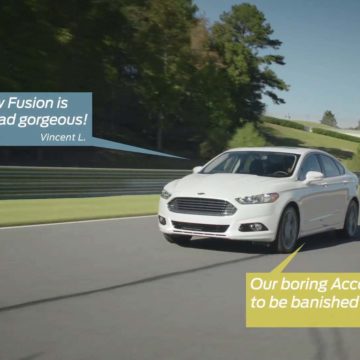
That project taught us something we've carried into every production since: knowing how to make something gives you more ways to imagine what it could be.
Constraints introduced early can become part of the creative. Constraints introduced late usually just feel like cuts.
What does more money actually buy?
We're hesitant to make a simple chart that says $50,000 buys this, $100,000 buys that, and $250,000 buys something else. There are too many variables.
A $50,000 tabletop shoot and a $50,000 comedy spot are solving very different production problems. Animation, documentary, live action, visual effects, celebrity talent, and experiential content all spend money differently.
But as budgets increase, you generally gain some combination of production value, time, options, preparation, and contingency.
And there's another thing a larger budget buys that doesn't necessarily show up in the final frame: more choices.
On a smaller production, you might scout a handful of locations and find two that are viable. With more resources, you can cast a wider net and consider ten. Maybe you see fifteen casting options instead of fifty. Maybe there are fewer wardrobe pulls, fewer prop options, or less time to explore different design approaches.
What you're paying for is the ability to explore before you commit.
More preparation, casting options, locations, design approaches, music choices, or visual-effects tests create more opportunities to find something better. At lower budgets, you're making decisions inside a narrower lane.
That doesn't mean the decisions will be bad. Great work can absolutely come from limited options. But there's a difference between choosing the best solution and choosing the best solution available within a very limited set of options.
A larger budget expands that set.
And sometimes the most valuable thing we can do is tell you that you don't need those additional options. If the idea is strong enough, there may be no reason to spend more.
Spend money on the thing that matters
Every idea has one or two things that make it work.
Maybe it's the performance. Maybe it's a spectacular location. Maybe it's the production design, cinematography, animation, visual effects, music, or a very specific piece of casting.
Figure out what that is and protect it.
A production budget is really a set of priorities. If everything is important, nothing is. We'd rather spend aggressively on the thing that makes an idea memorable and simplify somewhere else than distribute the budget evenly across a bunch of things nobody will notice.
This is another reason to involve us early. We can help identify which elements are essential to the creative and which ones are simply expensive.
Sometimes we'll tell you that the location is worth every penny. Other times we'll tell you to forget the location and spend the money on casting. Or that the complicated camera move you're excited about isn't doing anything for the idea.
We're not afraid to have those conversations. It's part of what you're paying us for.
Don't forget everything that happens after the shoot
The shoot gets most of the attention because it's the visible part of production. Post-production can be just as substantial.
Editing, visual effects, animation, cleanup, color, music, sound design, mixing, graphics, versioning, conforming, and delivery can represent a meaningful portion of the budget.
Some projects barely need any post beyond an edit and color pass. Others are essentially created after the shoot is over.
The production approach should account for that from the beginning. A concept that depends on elaborate visual effects needs a very different plan from one built around a great performance and a strong edit.
And the finished commercial is rarely the only thing a brand needs.
A single :30 is different from a :30 plus three :15s, six :06s, vertical versions, square versions, still photography, product cutdowns, multiple end cards, and localized versions.
The additional assets may not require another shoot, but they require planning, editing, graphics, sound, approvals, quality control, and delivery.
More importantly, those deliverables can influence how we approach the creative in the first place.
If we know you're going to need twenty pieces of content, we might recommend an entirely different production approach than if you're making one hero film.
That's why we like to understand the whole assignment before production starts, not just the first thing on the deliverables list.
Talent can change everything
Talent is another category that can dramatically affect a budget.
The cost isn't only what someone is paid to show up on set. Usage matters too. Where will the work run? For how long? In which territories? Is it broadcast, digital, social, paid media, or some combination? Is there exclusivity?
A recognizable actor or celebrity can obviously change the equation substantially, but usage can be meaningful even with non-celebrity talent.
And talent isn't always the answer.
Sometimes a great comedian can carry an entire campaign. Sometimes real people are more compelling. Sometimes you don't need anyone on camera at all.
The right choice depends on the idea, the audience, and what you're trying to accomplish. It's another creative decision with financial implications, which is exactly why those conversations should happen together.
What happens when the budget isn't enough?
You really have three choices. Increase the budget. Change the production approach. Or change the idea.
The third option is often better than people think.
We've seen plenty of projects where the original idea was slowly stripped down until it technically fit the number. Fewer locations, fewer cast members, less production design, shorter shoot days, less time in post. Eventually, you're left with something that resembles the original concept but has lost most of what made it interesting.
Nobody's particularly happy with that outcome.
We'd rather go back to the beginning and find another way to accomplish the same objective.
Maybe the original idea needed a spectacular location and a huge cast. But the actual goal was to make people laugh. Or make a product feel desirable. Or introduce a brand in a way people would remember.
There are lots of ways to accomplish those things.
The goal isn't to make the cheapest version of the idea. It's to make the best idea for the money you have.
And that requires a willingness to reconsider the creative, not just negotiate the production costs.
So how much should you spend?
Before recommending a budget, we'd want to understand what you're trying to accomplish, who you're trying to reach, where the work will live, and what success looks like.
We'd also want to understand the larger marketing effort. Is this a one-off campaign? A product launch? The beginning of an ongoing content program? Are you making one commercial or building a system that needs to generate content for the next year?
Those answers matter.
If you're spending $100,000 on production but only have $5,000 to distribute the work, we should probably talk about that. If you're planning a substantial media investment but haven't allocated enough resources to make something distinctive, we should talk about that too.
There isn't a universal percentage of your marketing budget that should go toward production. And there isn't a magic number that guarantees a great commercial.
The right investment is the one that gives the idea the resources it needs to accomplish its job.
Sometimes that means spending more than you originally planned. Sometimes it means spending less. And sometimes it means making something completely different.
The best time to call us is before you know what you need
A production budget isn't just a number. It's a series of decisions about what matters, what doesn't, and how to turn the resources you have into the best possible work.
That's why we don't love being brought in at the very end to put a price on someone else's idea. We can absolutely do that, and we do it all the time. But there's a lot more value in having us at the table while those decisions are still being made.
We've spent more than twenty years figuring out how to connect creative ambition with production reality. Sometimes we'll tell you that an idea needs more money. Sometimes we'll tell you it needs less complexity. And sometimes we'll tell you there's a completely different way to approach the problem that nobody has considered yet.
We won't tell you every idea is possible at every price. That's not how production works. But we will help you find the best idea for the resources you have, and we'll be pretty opinionated about what we believe will work.
You have to be willing to trust that guidance. Not blindly, and not without asking questions. We should be able to explain why we're recommending a particular approach and what the tradeoffs are. But if every element of the creative is sacred and every dollar of the budget is fixed, you're not leaving much room for us to do the thing we're particularly good at.
Think back to building that house. You wouldn't hire an architect after you'd already decided the floor plan, the materials, the foundation, and the exact cost of every room. You'd bring them in to help figure out what kind of house you could build, what was worth investing in, and how to make the most of the property and resources you had.
We'd like to have that same conversation about your commercial.
You don't need to know what to make or how much it should cost before calling us. Figuring that out together is part of what you're hiring us to do.